


April 24, 2026
As the international community marks World Intellectual Property (IP) Day on April 26, WIPO GREEN is celebrating creators, inventors and entrepreneurs who are driving sustainability within the sports sector. These innovations underscore a growing movement to integrate environmentally conscious practices and new technologies into sports, while supporting the efforts to achieve the Sustainable Development Goals.

A key hub for discovering and sharing sustainable and cross-cutting technologies is the WIPO GREEN database, a global platform offered by the World Intellectual Property Organization (WIPO). This resource brings together environmentally sound technologies and the innovators behind them, offering a comprehensive collection that demonstrates how advances in sustainability can also enhance sports performance. Within its extensive collection, technologies are emerging as powerful solutions, becoming examples of how sustainability and sports performance can go hand in hand.
With rising global temperatures, the demand for climate-friendly advancements is stronger than ever. Today, some answers are already embedded in the walls, floors and ceilings of sports facilities, offering practical demonstrations of environmental stewardship.
One standout solution is Radi·Ace, a radiant heating and cooling system designed to be both people- and planet-friendly. Unlike traditional air conditioning systems, Radi·Ace circulates cold or hot water inside specially engineered panels. By utilizing radiant far-infrared energy, it efficiently and gently manages indoor temperatures. This approach reduces energy consumption and lowers CO₂ emissions, while delivering comfort directly to surfaces, without the need for fans or moving parts.
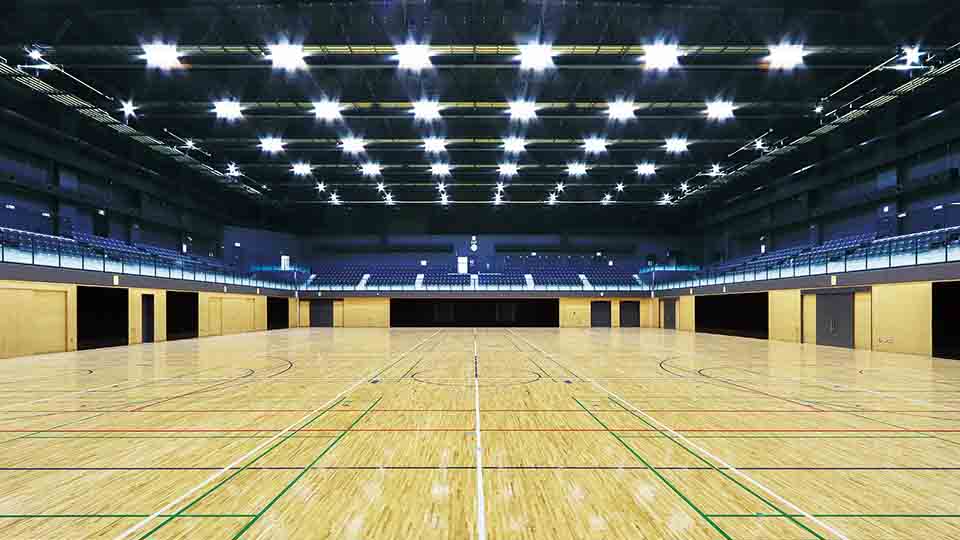
This solution was developed through a joint effort between the Nippon Light Metal Group, which has various areas of expertise in the aluminum field, and Ace Water, which has strengths in water treatment technology. Their joint patent ownership fostered mutual trust, deepened their partnership and combined their strengths to create a practical climate-friendly innovation.
Listed in the WIPO GREEN database, and protected by a mixture of patents, design registrations and a trademark, Radi·Ace has already been installed in multiple sports facilities, serving as a benchmark for sustainable innovation.
The transition toward sustainability in sports is reflected as well in global recycling practices. With intensifying concerns over climate change and waste management, stakeholders are rethinking how sports equipment is used and discarded. This industry is increasingly adopting inventive solutions that encourage responsible consumption and production, marking a shift toward a circular economy.
One notable example is Renewaball, a company working on the development of recyclable racket sports balls, by rethinking the method of recycling a mixed waste stream. Such innovations open the door to circular solutions in sports where waste was once taken for granted.

Major global brands are also part of this transformation. Nike filed patent applications related to recyclable golf ball technologies. Adidas, meanwhile, has disclosed an invention for the recycling of a shoe, addressing one of the most visible and complex waste streams. These advancements signal a broader commitment by leading industries to foster sustainability and inspire widespread change throughout the sports world.
The examples highlighted above illustrate only a fraction of the more than 140,000 solutions available through the WIPO GREEN database. This comprehensive resource encompasses a wide variety of environmental technologies, providing valuable technical information that can serve as inspiration for the next wave of sustainable innovations. It also offers insights to startups, researchers, manufacturers or policymakers on current possibilities and future advancements.
Beyond acting as a database, WIPO GREEN functions as a dynamic platform for fostering connections. It enables users to directly engage with innovators, opening doors to new research and development partnerships, potential business collaborations and opportunities for technology licensing. In a world where tackling climate challenges requires concerted action, these connections are just as crucial as the technologies themselves.
Sustainability is not an individual effort; it requires teamwork and a shared sense of purpose. By bringing together diverse expertise, protecting innovation through IP and fostering open collaboration, the global community can accelerate the transition to sustainable solutions. This approach is vital not only within the sports industry, but also in broader contexts where environmental stewardship is essential.
As athletes pursue new records, the systems and initiatives behind them must also evolve. By embracing platforms like WIPO GREEN and leveraging its diverse resources, industry leaders, athletes and fans alike can help build a future where environmental responsibility, innovation and a spirit of healthy competition all thrive together. The pursuit of a greener sports ecosystem has begun, and it’s a game where everyone has an active role to play, now and for generations to come.