


October 14, 2026
Reliable communication systems are the backbone of modern railway networks. From high-speed rail to conventional lines, continuous connectivity ensures safe operations, efficient traffic management and real-time coordination across vast distances. However, these systems depend on stable environmental conditions to function properly.
In Beijing, a key railway communications operator faced a challenge: how to protect critical equipment from overheating during power outages or cooling system failures, while also improving energy efficiency. Through the WIPO GREEN Acceleration Project - with the support of the WIPO Office in China, Beijing IP Office and the Bluetech Clean Air Alliance (BCAA) as a local partner - an innovative solution was identified, tested and deployed—demonstrating how technology transfer can deliver both operational resilience and measurable environmental benefits.
The technology seeker, the Beijing Communication Section of China Railway Beijing Group Co., Ltd., is responsible for maintaining communication systems across more than 4,700 kilometers of railway lines. These systems underpin essential communication functions such as signaling, dispatching and safety monitoring.
However, communication equipment rooms are highly sensitive to temperature fluctuations. Temperatures can rise quickly in the event of a power outage or air conditioning failure, but even under normal operating conditions, maintaining a constant indoor temperature requires significant energy. The organization therefore needed a cooling solution capable of helping stabilize conditions, ideally around 22°C, on an ongoing basis, while also strengthening resilience during emergencies.
Beyond reliability, the requirement also included improving energy efficiency and reducing carbon emissions. Any solution would need to integrate with existing infrastructure, operate under demanding conditions and support modern monitoring and management capabilities.
The solution was provided by Beijing Anxing High Tech New Energy Development Co., Ltd., a company specializing in advanced thermal management technologies. Its system is based on phase change materials (PCMs), which store and release thermal energy during phase transitions.
Unlike conventional cooling approaches that rely heavily on continuous mechanical operation, PCM-based systems are passive, absorbing and releasing heat as the surrounding temperature changes. As a result, the technology helps maintain a stable room temperature without extra energy consumption, reducing the need for constant compressor operation in traditional air conditioning units. These materials have a significantly higher energy storage density—between 5 and 45 times greater than water—making them particularly effective for continuous temperature control in critical environments. The PCM technology therefore serves two purposes at once: passively helping maintain a stable temperature, thus lowering energy consumption in air conditioning units, and by providing an added layer of protection in emergency situations by slowing or temporarily preventing temperature increases and helping ensure continued operation.
As with any material used in critical infrastructure, the technology also requires careful assessment of potential drawbacks, including installation requirements, compatibility with existing equipment rooms, long-term material performance and safety considerations.
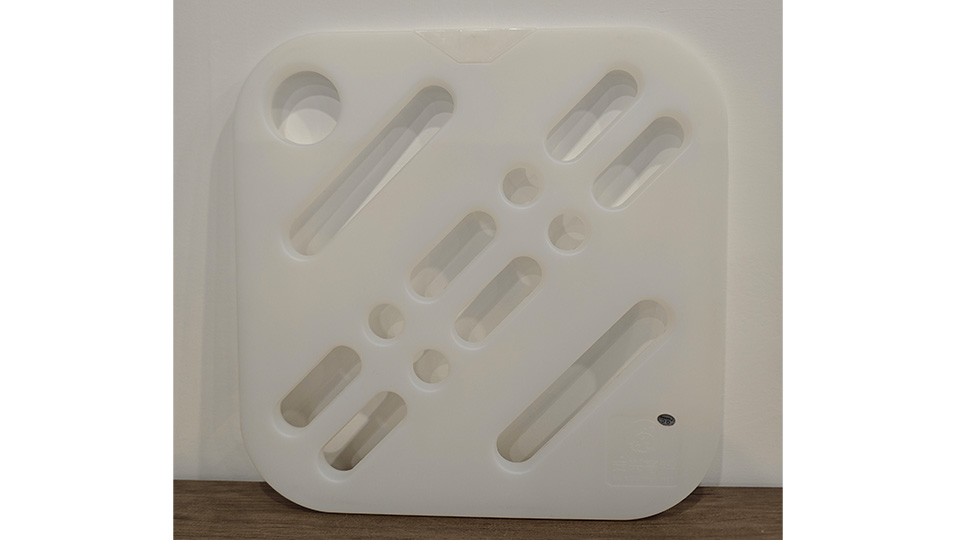 Energy Storage Module (Image: Jinan MA, Beijing Anxing High Tech New Energy Development Co.).
Through the coordination of BCAA under the WIPO GREEN Acceleration Project, the technology provider and the railway operator were brought together and supported throughout the implementation process.
The project progressed from initial matchmaking to a formal agreement, followed by full-scale implementation, commissioning and operational rollout. The deployment covered multiple communication equipment rooms within the China Railway Beijing Group’s communication network. The system is now fully operational and provides reliable backup cooling to safeguard critical infrastructure.
The deployment has delivered tangible results. An independent evaluation conducted under controlled conditions comparing rooms equipped with the system and rooms not equipped with it demonstrated an average 17% reduction in energy consumption within the first six months of trial implementation.
On average, the system reduced monthly electricity use from 729.75 kWh to 602.23 kWh per room. This translates into annual savings of approximately 1,530 kWh per room.
From a climate perspective, these savings are significant. Using standard emission factors, the annual reduction in carbon dioxide emissions per room is estimated at around 0.97 metric tons of CO₂. This is roughly equivalent to the carbon sequestration capacity of about 54 trees per year.
Beyond emissions reduction, the system also improves operational resilience by minimizing the risk of equipment overheating, reducing maintenance demands and extending the lifespan of cooling systems.
For railway communication operations, stable temperature control is directly linked to the reliability of transport services. This solution has helped us strengthen the resilience of our equipment rooms while reducing energy consumption, showing that these types of technologies can support both safer operations and lower carbon infrastructure.
Xixi ZHANG, representative of the Beijing Communication Section of China Railway Beijing Group Co., Ltd.
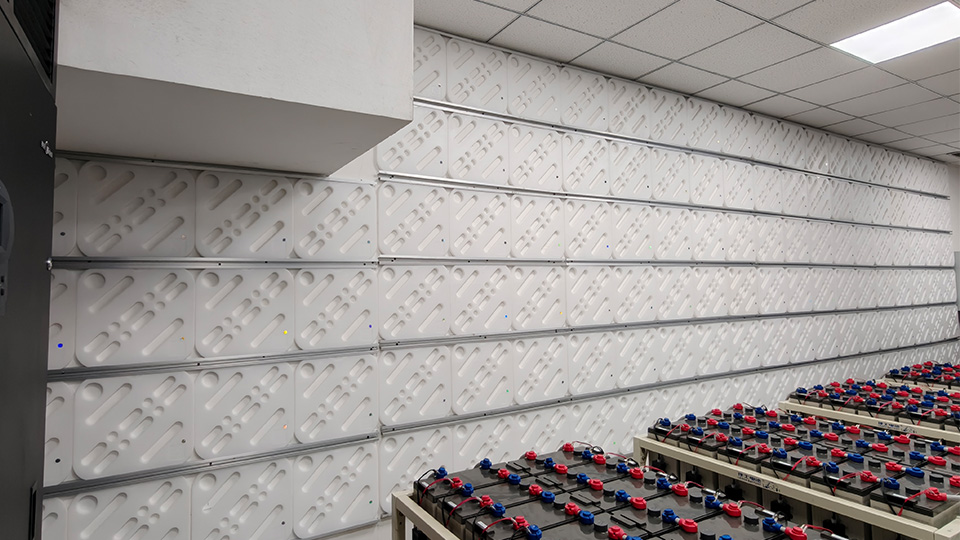 Railway Communication Room where the energy storage modules are attached to the wall (Image: Wenxue DONG, Beijing Communication Section of China Railway Beijing Group Co.).
This deployment highlights how innovative technologies, when effectively matched with real-world needs, can deliver both environmental and operational value. By integrating advanced thermal storage solutions into critical infrastructure, railway operators can enhance system reliability while contributing to greener operations.
The collaboration also underscores the importance of local partnerships. BCAA’s role in facilitating coordination on the ground was instrumental in moving from initial discussions to full deployment, ensuring that both technical and implementation challenges were addressed efficiently.
As countries and industries work toward decarbonization goals, solutions like this offer practical pathways for reducing energy use without compromising performance. For the railway sector, where reliability is paramount, such innovations provide a compelling model for future adoption.
Through initiatives like the WIPO GREEN Acceleration Project, these solutions can continue to be scaled and replicated, turning technology transfer into real-world impact.