


November 11, 2026
The World Intellectual Property Organization (WIPO) launched the fifth edition of the Green Technology Book, Solutions for climate-impacted ecosystem restoration at COP31 in Antalya, Türkiye, exploring how technology and nature-based approaches can help restore ecosystems affected by climate change.
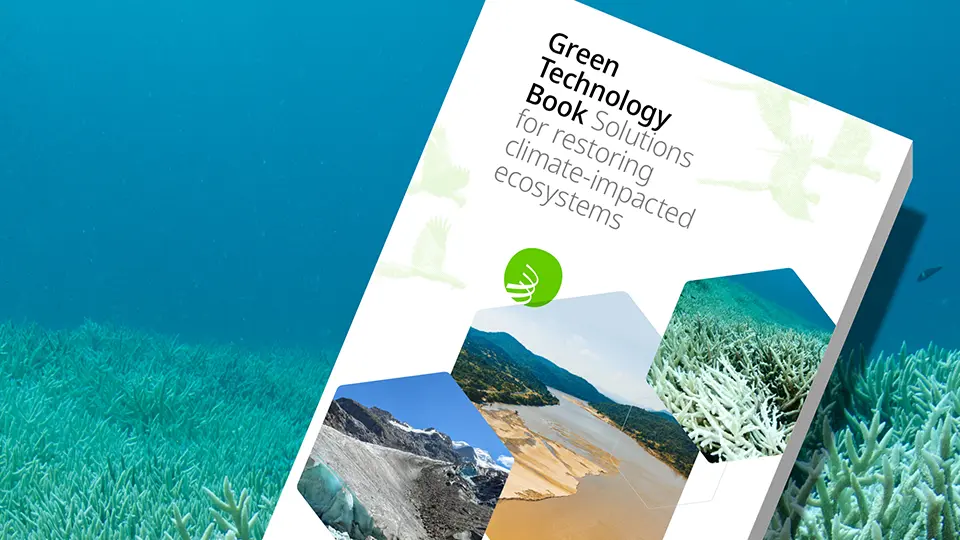
Forests face intensifying droughts and wildfires; oceans are warming; rivers and wetlands are under growing pressure; and glaciers and permafrost are undergoing profound changes. Against this backdrop, the publication examines how innovation can help us understand environmental change, guide restoration efforts and assess whether ecosystems are recovering.
The book brings together technologies ranging from natural regeneration and agroforestry to satellites, artificial intelligence (AI), robotics and biotechnology. It highlights how these tools can work alongside local knowledge and nature-based solutions to support more targeted, effective and resilient restoration.
The book highlights a shift across ecosystems from isolated interventions toward approaches that restore broader ecological functions. Rather than focusing solely on activities such as planting trees, restoration increasingly considers the connections between biodiversity, soil, water and ecological processes.
On land, natural regeneration, soil restoration and agroforestry can help recover degraded landscapes and strengthen resilience to a changing climate. In oceans, AI, robotics and digital models offer opportunities to anticipate environmental change and support the restoration of coral reefs, kelp forests and seagrass meadows.
For freshwater ecosystems, the book explores approaches ranging from water-quality sensors and AI forecasting to river re-meandering and floodplain reconnection. These tools and interventions can help restore healthier waterways and inform decisions as conditions change.
In the cryosphere—the frozen parts of the planet—restoration takes on a different meaning. As glaciers retreat and permafrost thaws, the emphasis is increasingly on understanding irreversible changes, anticipating hazards and protecting the ecosystems, communities and infrastructure that depend on frozen environments.
The fifth edition emphasizes that technology cannot restore ecosystems on its own. Instead, it provides knowledge and tools that complement ecological approaches and local knowledge, guiding interventions and helping assess their outcomes.
Predictive modeling can enable earlier action, while better monitoring can show whether restoration efforts are helping ecosystems recover. By linking these capabilities to different ecosystem needs, the new edition of the Green Technology Book explores how innovation can support restoration in a changing climate.
Explore the Green Technology Book Series and discover more solutions in the WIPO GREEN Database.