


November 12, 2026
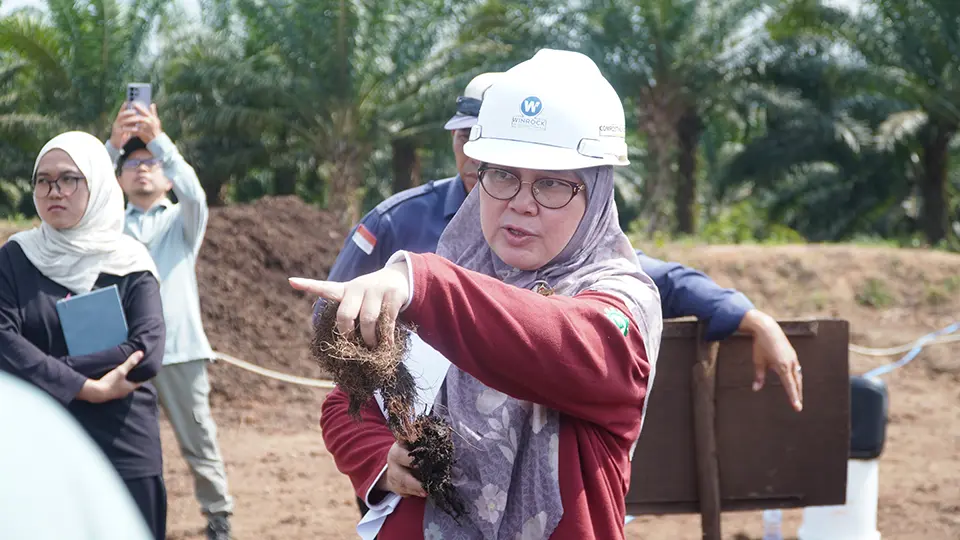
As efforts to promote more sustainable practices in Indonesia’s palm oil sector move from technology identification to field deployment, technical expertise is essential. Shinta Mulyasari, a chemical engineer from Bandung, West Java, is supporting a WIPO GREEN Acceleration Project funded by the Australian Government through Funds-in-Trust Australia by assessing a composting process and its potential environmental and economic benefits.
Shinta’s contribution to the project builds on a career spanning more than 21 years in renewable energy and wastewater treatment. After graduating in chemical engineering from Diponegoro University, she developed deep expertise in biogas, with a particular focus on turning palm oil mill waste into renewable energy. Today, as President Director of PT Ecody Agro Energi and a consultant with Winrock International, she draws on that experience to advance practical sustainable energy solutions across Indonesia. In this interview with Jessie Fonters, Project Manager in WIPO’s Climate Change and Food Security Unit, Shinta discusses the importance of managing palm oil mill by-products, the pilot’s initial results and the steps needed to support wider adoption of the composting technology.
Indonesia's palm oil sector generates very large quantities of by-products every year. With around 900 palm oil mills operating across the country, annual production is estimated at 91–145 million m³ of POME and 36–41.9 million tons of EFB.
Managing these volumes sustainably is a significant challenge. POME can generate methane emissions, while EFB is often left to decompose or be incinerated. At the same time, these by-products represent a valuable resource. When properly managed, they can be converted into compost, helping to reduce waste, improve soil health and support more sustainable agricultural practices.
Using the International Sustainability and Carbon Certification (ISCC) methodology, preliminary estimates indicate that the EFB composting pilot plant could reduce GHG emissions by approximately 66,000 tons of carbon dioxide equivalent (tCO₂e) per year, assuming a palm oil mill processing capacity of 45 tons of fresh fruit bunches (FFB) per hour.
These anticipated savings would come from several sources, including lower methane emissions compared with conventional POME and EFB management. The project's Monitoring and Evaluation (M&E) plan will continue collecting and analyzing data during implementation and for approximately one year following the start of the composting activities, including the improvements introduced across successive composting batches, to validate the estimated impacts.
Early observations from the field and initial laboratory results are encouraging. The first batch showed signs of compost maturity at around day 45. Following improvements to the process, laboratory results from the second batch indicated that maturity could be reached at around day 30. Key parameters, including the carbon-to-nitrogen (C/N) ratio, met the targets set by Indonesia's Ministry of Agriculture, while the compost's color, smell and texture continued to improve between days 45 and 60.
Further laboratory results will provide a more comprehensive assessment of compost quality. These findings will also help optimize the next composting batches and refine the process for future applications.
Beyond its environmental benefits, the project has the potential to create economic value from materials often regarded as waste. Converting EFB and POME into organic fertilizer offers a practical way to reuse locally available resources while reducing waste management challenges.
This is particularly relevant for palm oil mills without their own plantations, for which EFB can represent a significant disposal burden. Mills with plantations may be able to replace part of their inorganic fertilizer use, helping reduce input costs while contributing to more sustainable practices.
Assessing economic viability is therefore an important part of the pilot. Through its Monitoring and Evaluation Framework, the costs and benefits of compost production will be compared with conventional fertilizer use to better understand the technology's potential for wider adoption.
The immediate priority is to demonstrate the pilot’s value and share its lessons with nearby palm oil mills and farmers. By showing results under real operating conditions, we hope to encourage wider adoption of composting technologies and support the replication of similar projects in other palm oil-producing regions, including Sumatra.
At the same time, the project will generate the technical and economic data needed for scale-up. This includes assessing investment and operating costs, refining operating procedures and developing engineering designs that can be adapted to different sites. The aim is to provide a practical roadmap for expanding the use of EFB and POME composting as a sustainable waste management solution in Indonesia's palm oil sector.
For Shinta, the pilot represents an opportunity to turn technical evidence into practical change. By testing the solution under field conditions and documenting its environmental and economic performance, the project can help stakeholders make informed decisions about future investment and adoption.
Her contribution also highlights the important role of women technical experts in developing and deploying green technologies that respond to local needs, support more circular use of resources and contribute to a more sustainable future.